Social Media Is on Trial — And This Time, It’s Not Metaphorical
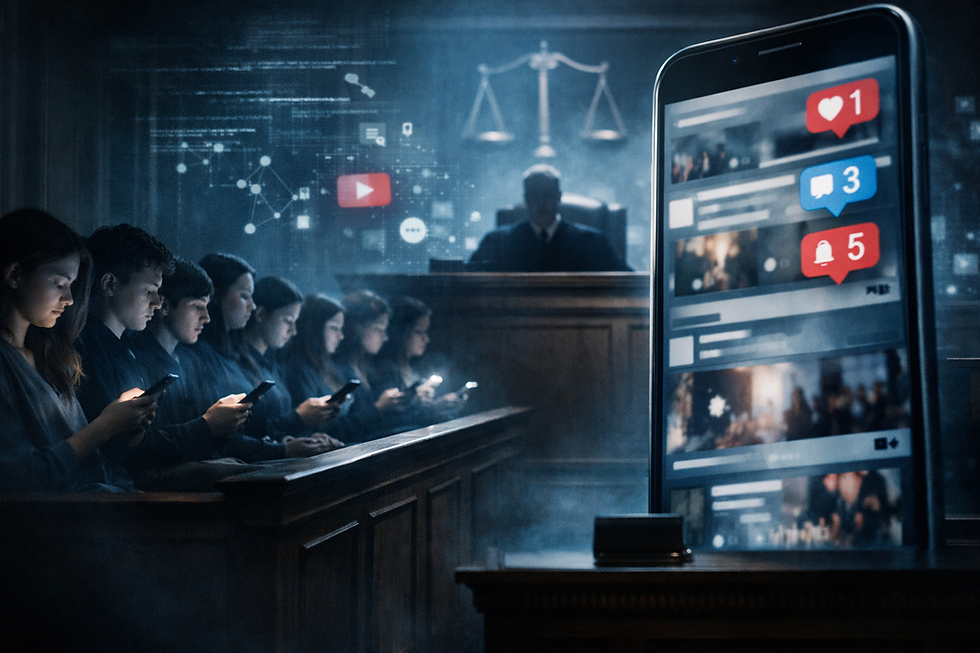
For years, people have casually said things like “social media is addictive” or “these apps mess with your head.” This week, that idea entered a courtroom.
In Los Angeles, opening arguments began in what’s being called a landmark social media addiction trial, the first time major tech platforms are facing a jury over claims that their products were intentionally designed to be addictive for young users. At the center of the case is Meta, which owns Instagram, Facebook, and YouTube.
Even more unusually, the trial isn’t happening at arm’s length. Two of the most recognizable figures in tech, Mark Zuckerberg and Adam Mosseri, are expected to testify directly in front of a jury.
This isn’t about abstract policy debates anymore. It’s about accountability.
What the Lawsuit Is Actually Claiming
The case was brought by a 19-year-old plaintiff, identified as K.G.M., alongside other young users. Their core claim is blunt: social media platforms knowingly built features that exploit human psychology, particularly adolescent psychology, to maximize engagement, regardless of mental health consequences.
The lawsuit argues that design choices like infinite scrolling, autoplay, algorithmic recommendations, and intermittent reward systems borrow heavily from techniques used by slot machines and even the tobacco industry. The goal, according to the plaintiffs, wasn’t connection; it was compulsion.
They claim these features contributed to serious mental health outcomes, including anxiety, depression, and body-image issues.
For many people reading this, none of that feels surprising. Most users don’t consciously choose to spend hours scrolling. The apps are engineered so that stopping feels harder than continuing.
What’s new is that this design philosophy is now being examined under oath.
The Defense: Correlation Isn’t Causation
Meta and YouTube strongly deny the allegations.
Both companies argue that mental health is influenced by many factors, including family environment, school pressure, social dynamics, and economic stress, and that blaming social media alone oversimplifies a complex issue.
Meta has pointed to changes it says demonstrate its commitment to youth safety, including teen-specific accounts and updated parental controls. YouTube has emphasized its collaboration with mental health experts and its focus on age-appropriate content and safeguards.
In short, their position is not that social media has no impact, but that it shouldn’t be singled out as the cause.
This argument resonates with a lot of people. Mental health is messy. No single app explains everything.
But the lawsuit isn’t asking whether social media is the only factor. It’s asking whether companies knowingly amplified risk while continuing to optimize for engagement and ad revenue.
A Second, Darker Layer to the Case
At the same time, Meta is facing a separate lawsuit in New Mexico that expands the conversation beyond addiction and into safety.
The state’s attorney general alleges that Meta’s platforms have become a “marketplace for predators,” exposing children to sexual exploitation while failing to adequately intervene. As part of a two-year undercover investigation, state investigators created fake underage accounts, posting content about things like losing baby teeth or starting middle school.
According to the lawsuit, those accounts were almost immediately inundated with sexually explicit messages and solicitations.
This allegation hits differently. It reframes the debate from “too much screen time” to “what happens when scale meets vulnerability.”
Meta’s legal team argues that when billions of people are connected, harmful behavior is inevitable, and that the company invests billions in safety teams and moderation tools.
Critics argue that those safeguards too often come after harm occurs, not before.
Why This Social Media Trial Feels Different

Past controversies around social media have usually ended in congressional hearings, internal studies, or policy updates. Rarely do they reach a jury.
This trial forces a more basic question: If you design a system that predictably influences behavior at scale, how responsible are you for the outcomes?
That question matters far beyond teens. Anyone between 18 and 35 grew up during the transition from optional digital spaces to unavoidable ones. Many people don’t remember choosing these platforms; they just became part of daily life.
The trial won’t shut down social media. It won’t suddenly make phones less compelling. But it may mark the moment when society stops treating engagement metrics as neutral and starts asking who pays the psychological cost.
What Happens Next
The verdict is still weeks away, and the outcome is uncertain. But regardless of how the jury rules, something fundamental has already changed.
For the first time, the architecture of social media, not just its content, is being examined in public, under legal scrutiny, with real consequences on the line.
And that may be the most important shift of all: moving the conversation from “why can’t users just log off?” to “what are platforms actually designed to do?”


